






For many families, hospital discharge feels like the final milestone after a successful surgery. The operation is complete, doctors have stabilised the patient, and everyone looks forward to recovery at home. But in reality, the most critical phase often begins only after discharge.
Recovery after major surgery is rarely limited to rest and medications. Many patients continue to remain weak, vulnerable, and dependent on support for several days or even weeks. Without proper monitoring and structured rehabilitation, small recovery challenges can quickly become serious medical complications.
In India, this concern is becoming more common because hospital stays are becoming shorter while surgeries are becoming more advanced. Families are often expected to manage complex recovery needs immediately after discharge, even when patients still require rehabilitation, oxygen support, wound care, or mobility assistance.
This is why professional post operative care has become increasingly important. Structured recovery support not only helps patients heal safely but also reduces complications, caregiver burden, and the chances of hospital readmission.
The challenge, however, is that many families do not realise when home recovery is no longer enough.
Here are seven important signs that indicate a patient may require professional post operative rehabilitation after surgery.
Recovery After Surgery Requires More Than Rest
Recovery after surgery involves much more than simply staying at home and taking medicines on time. During the post-discharge period, the body is still healing internally, even if the patient appears stable externally.
Patients recovering after cardiac surgery, stroke, paralysis treatment, joint replacement, spinal surgery, cancer surgery, or prolonged ICU stay often require continuous supervision during the first few weeks after discharge.
The recovery phase usually involves pain management, wound monitoring, rehabilitation exercises, respiratory care, nutritional support, medication management, and gradual rebuilding of physical strength.
Without structured support, even routine activities can become difficult and risky.
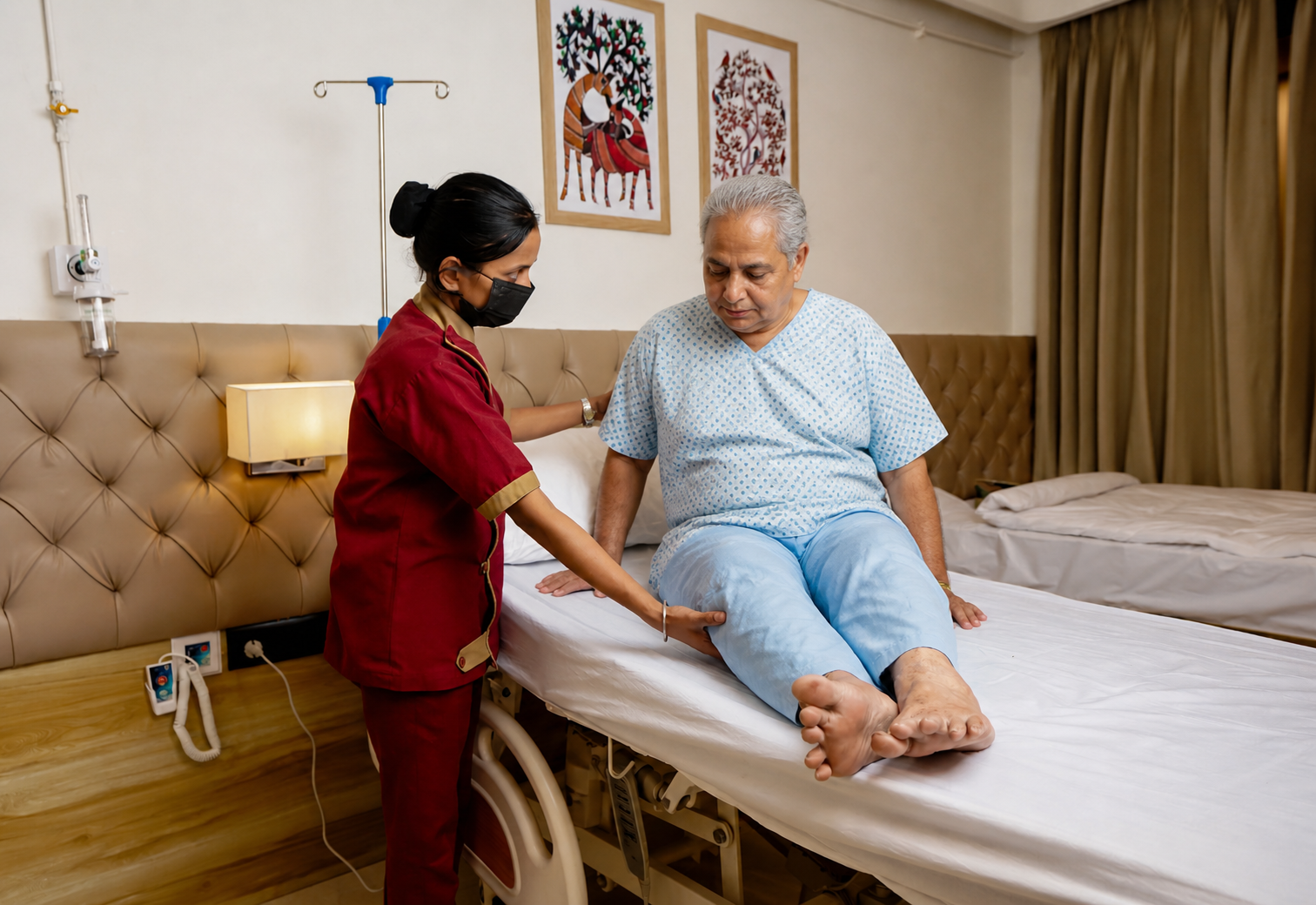
1. The Patient Is Struggling to Walk or Move Independently
One of the clearest signs that a patient requires professional post operative care is difficulty with mobility.
Many patients feel extremely weak after surgery and struggle with basic movements such as standing, walking, turning in bed, or climbing stairs. This is especially common after orthopaedic surgeries, neurological procedures, paralysis treatment, stroke recovery, or prolonged ICU admission.
Reduced mobility significantly increases the risk of falls, muscle loss, bed sores, blood clots, and delayed recovery.
Families often try to manage mobility support themselves, but assisting a recovering patient safely requires proper techniques, supervision, and rehabilitation planning. Improper handling can sometimes worsen pain or lead to further injuries.
Professional post operative rehabilitation programs focus on supervised physiotherapy, balance training, mobility exercises, and gradual strength-building to help patients regain confidence and independence safely.
Early rehabilitation is particularly important because prolonged inactivity can slow down recovery considerably.
2. The Surgical Wound Needs Continuous Monitoring
Many families assume that once the surgery is complete, wound healing will happen naturally at home. However, surgical wounds remain vulnerable even after discharge.
Infections may develop gradually and can become serious if not identified early.
Signs such as redness, swelling, discharge, fever, increased pain, or foul smell around the wound should never be ignored. Elderly patients, diabetic individuals, cardiac surgery patients, and people with low immunity are especially vulnerable to post-surgical infections.
Professional post operative care ensures wounds are monitored regularly through sterile dressing protocols, infection prevention practices, and nursing supervision.
Organised recovery-focused care homes generally follow structured clinical protocols for wound management, which helps reduce complications and supports faster healing.
This level of consistency can be difficult to maintain in unstructured home environments.
3. The Patient Has Breathing Difficulty or Requires Oxygen Support
Respiratory complications are common after major surgeries, particularly among senior citizens and patients recovering after cardiac surgery, prolonged ICU stays, or lung-related procedures.
Some patients continue to experience shortness of breath, low oxygen levels, chest congestion, fatigue, or difficulty speaking comfortably after discharge.
In certain cases, patients may require oxygen concentrators, BiPAP support, chest physiotherapy, or respiratory exercises for several weeks.
Managing respiratory recovery at home can become challenging without trained supervision, especially during nighttime emergencies.
This is where pulmonary rehabilitation becomes extremely important.
Structured pulmonary rehabilitation focuses on improving lung function, strengthening respiratory muscles, increasing oxygen intake, and preventing chest infections.
Professional monitoring also helps identify respiratory complications early before they become severe.
4. The Patient Appears Confused or Mentally Disoriented
Mental confusion after surgery is more common than many people realise, especially among elderly patients.
Some individuals may experience memory issues, anxiety, confusion, sleep disturbances, reduced alertness, or sudden behavioural changes after surgery or ICU admission.
This can happen due to the effects of anaesthesia, prolonged hospitalisation, neurological complications, infections, medication side effects, or physical weakness.
Mental disorientation increases the risk of falls, medication errors, wandering, and delayed recovery.
Families often find it emotionally stressful to manage patients who appear mentally unstable or confused after surgery.
Professional recovery environments provide continuous supervision, structured routines, and clinical monitoring that help maintain patient safety during this vulnerable phase.
5. Managing Medicines Has Become Complicated
After major surgery, medication schedules often become extremely complex.
Patients may be prescribed painkillers, blood thinners, antibiotics, diabetic medicines, cardiac medicines, respiratory medications, or nutritional supplements simultaneously.
Missing doses, taking incorrect medications, or improper timing can affect recovery outcomes significantly.
This challenge becomes even greater when patients already suffer from chronic conditions such as diabetes, hypertension, or heart disease.
Professional post operative care ensures medicines are administered correctly and monitored closely. This reduces the risk of complications caused by medication errors and helps maintain recovery stability.
For elderly patients or those with memory problems, supervised medication management becomes particularly important.
6. The Patient Is Extremely Weak and Dependent on Others
Weakness after surgery is not always temporary tiredness.
Many patients experience severe muscle loss and reduced stamina after prolonged hospitalisation. Activities such as bathing, eating, dressing, using the washroom, or changing position in bed may become difficult without assistance.
Families often underestimate the physical demands of caregiving until recovery begins at home.
Lifting or supporting a patient repeatedly throughout the day can quickly become physically exhausting for caregivers, especially when recovery takes longer than expected.
Professional post operative rehabilitation programs help patients gradually regain physical strength, endurance, and functional independence through structured recovery planning.
This becomes especially important during cardiac rehabilitation and neurological recovery, where recovery progress depends heavily on supervised rehabilitation consistency.
7. Caregiver Stress Is Becoming Unmanageable
One of the biggest but least discussed signs is caregiver burnout.
Family members often try to manage recovery themselves because they want the patient to remain comfortable at home. However, long-term caregiving can become emotionally and physically overwhelming.
Managing mobility support, feeding assistance, medications, physiotherapy routines, respiratory equipment, sleep monitoring, and emergency situations requires constant attention.
Over time, caregivers may experience exhaustion, anxiety, sleep deprivation, and emotional stress.
This not only affects the caregiver’s well-being but can also impact the quality of recovery support the patient receives.
This is where professional recovery support and respite care become extremely valuable.
Structured recovery environments allow families to focus on emotional connection and reassurance while trained teams manage medical care, rehabilitation, and supervision safely.
Why Organised Post Operative Rehabilitation Matters
Recovery after major surgery requires coordinated care between doctors, nurses, physiotherapists, nutritionists, respiratory therapists, and rehabilitation experts.
This level of integrated support is difficult to achieve through fragmented or unstructured arrangements at home.
Organised recovery-focused care homes provide structured post operative rehabilitation under one roof. Patients benefit from continuous monitoring, daily rehabilitation, emergency support systems, clinically supervised recovery plans, and coordinated recovery management tailored to their medical condition.
Many established providers also support TPA coordination and insurance assistance for eligible recovery and rehabilitation programs, helping families navigate approvals, documentation, and financial planning during extended recovery periods.
In addition, organised recovery ecosystems often provide access to structured payment options such as No Cost EMI plans, which can help families manage long-duration recovery expenses more comfortably.
Established providers also bring standardised protocols, trained multidisciplinary teams, and infrastructure designed specifically for recovery support.
Compared to smaller standalone setups, organised recovery ecosystems are often better equipped to manage medically complex cases safely while ensuring continuity of care throughout the recovery journey.
India’s Growing Need for Structured Recovery Care
India is witnessing a rapid increase in surgeries, elderly care requirements, cardiac procedures, neurological recovery cases, and ICU survivorship.
At the same time, shorter hospital stays are shifting recovery responsibility toward families.
This has created growing demand for structured post operative care ecosystems that bridge the gap between hospital and home.
In bigger cities, organised providers such as Antara Care Homes are helping address this gap through NABH-accredited care homes focused on post operative rehabilitation, cardiac rehabilitation, pulmonary rehabilitation, paralysis treatment recovery, and assisted recovery support.
With multidisciplinary teams, rehabilitation infrastructure, and established clinical protocols, organised recovery providers are becoming an increasingly important part of India’s evolving healthcare ecosystem.
Early Recovery Support Can Prevent Bigger Complications
Many complications after surgery develop slowly and become serious only when they are ignored for too long.
Recognising the warning signs early and seeking professional recovery support at the right time can significantly improve recovery outcomes.
Structured post operative care not only helps patients recover faster but also reduces complications, improves mobility, lowers hospital readmission risk, and eases caregiver stress.
Most importantly, it helps patients regain confidence, independence, and dignity during one of the most vulnerable phases of recovery.
FAQs
1. What is post operative care?
Post operative care refers to the medical, nursing, and rehabilitation support provided after surgery to ensure safe healing and recovery.
2. When does a patient require professional post operative rehabilitation?
Patients may require professional recovery support when they experience mobility issues, breathing difficulty, wound care needs, confusion, severe weakness, or require continuous supervision after surgery.
3. What is pulmonary rehabilitation after surgery?
Pulmonary rehabilitation includes respiratory exercises, chest physiotherapy, oxygen support, and breathing therapies designed to improve lung recovery after surgery or prolonged illness.
4. How does cardiac rehabilitation support recovery?
Cardiac rehabilitation helps patients recover safely after heart surgery through supervised exercise, monitoring, nutrition guidance, and structured recovery support.
5. What is respite care during recovery?
Respite care provides temporary professional support for recovering patients while reducing physical and emotional stress on family caregivers.