








To determine the axis on an electrocardiogram (ECG), you must focus on the direction of electrical impulses in the heart. The axis provides crucial insights into heart function and can help diagnose various cardiac conditions. By analyzing the QRS complex in leads I and AVF, you can pinpoint the heart’s electrical orientation. Understanding how to determine axis on ECG is essential for interpreting ECG results accurately and interpreting cardiac health indicators effectively. Let’s delve into this essential skill for evaluating heart health.

Understanding and Interpreting ECG Axis: A Comprehensive Guide
Welcome to our detailed guide on how to determine the axis on an electrocardiogram (ECG). Understanding the ECG axis is crucial for healthcare professionals in diagnosing various cardiac conditions effectively. In this article, we will break down the concept of the ECG axis into simple terms, explore how to calculate it, and discuss its clinical significance. So, let’s dive in!
What is the ECG Axis?
Before we delve into how to determine the ECG axis, let’s first understand what the ECG axis represents. The electrical activity of the heart is recorded by the ECG, which displays the heart’s electrical signals as waveforms. The ECG axis refers to the overall direction of electrical activity within the heart at a specific point in time.
Imagine the heart as a complex electrical system with different regions generating electrical impulses. The ECG axis helps us visualize the overall orientation of these electrical signals. By determining the axis, healthcare professionals can identify abnormalities in the heart’s electrical conduction system.
Components of the ECG Axis
The ECG axis is defined by two main components:
1. Electrical Leads
Electrical leads are used to record the electrical activity of the heart from different angles. These leads provide multiple views of the heart’s electrical signals, allowing us to determine the overall direction of the electrical axis.
2. Hexaxial Reference System
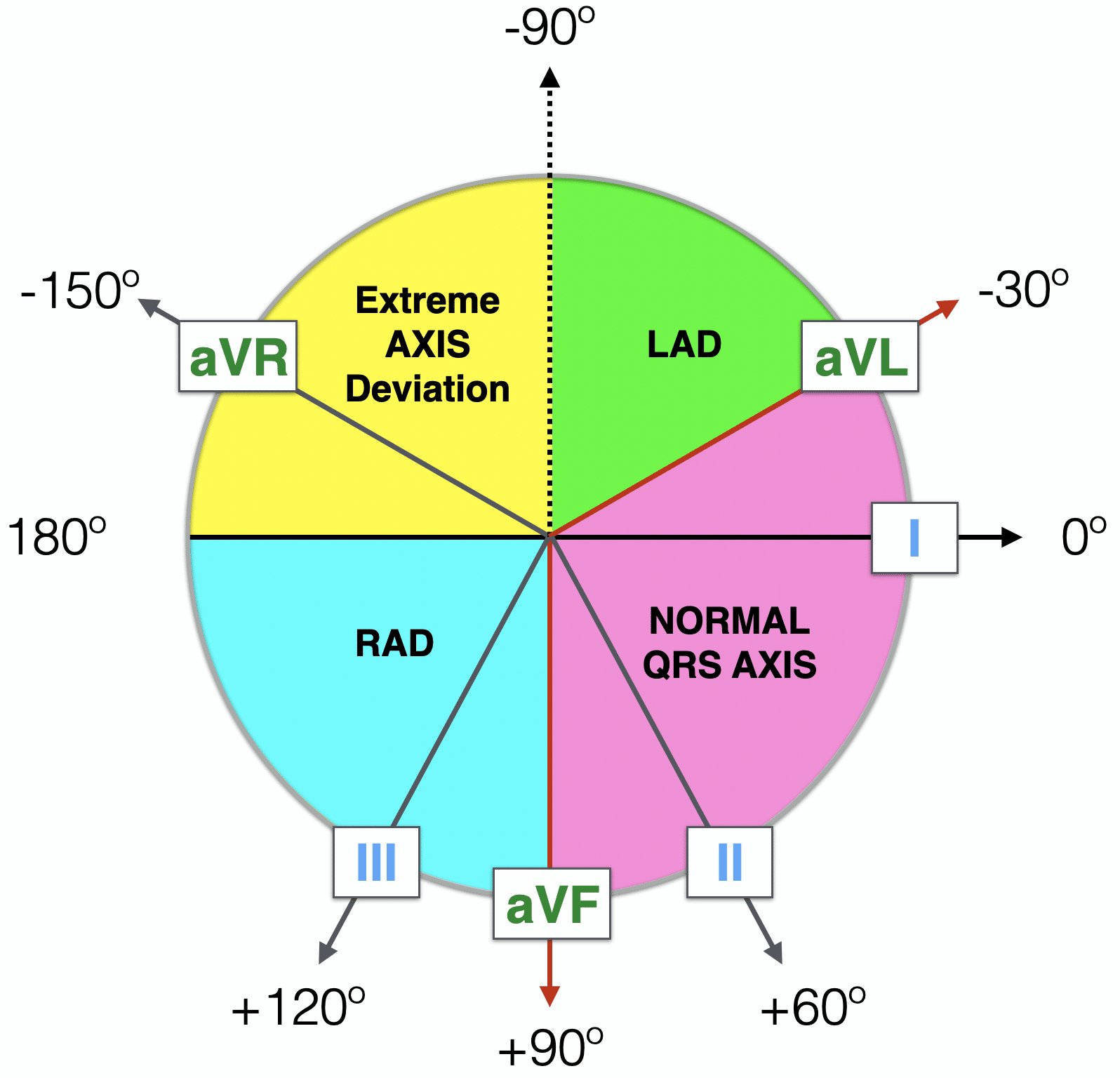
The hexaxial reference system is a diagram that helps us visualize the ECG axis in a simple and systematic way. By understanding this reference system, we can calculate the ECG axis accurately.
Calculating the ECG Axis
Now, let’s explore how to calculate the ECG axis using the information obtained from the ECG leads. The ECG axis is typically determined by examining the QRS complex, which represents ventricular depolarization.
Here is a step-by-step guide on how to calculate the ECG axis:
Step 1: Identify the Primary QRS Vector
Start by identifying the lead with the tallest R wave and the lead with the deepest S wave in the QRS complex. These leads represent the primary QRS vector, indicating the overall direction of electrical activity.
Step 2: Determine the QRS Axis Quadrant
Based on the leads with the tallest R wave and deepest S wave, determine the quadrant where the QRS axis falls. The four quadrants are:
- Normal (0 to +90 degrees)
- Left axis deviation (-30 to -90 degrees)
- Right axis deviation (+90 to +180 degrees)
- Extreme axis deviation (-90 to +180 degrees)
Step 3: Analyze Additional Leads
Check the QRS complex in other leads to confirm the direction of the axis. By examining multiple leads, you can ensure the accuracy of your axis calculation.
Clinical Significance of the ECG Axis
Understanding the ECG axis is essential for diagnosing various cardiac conditions. The ECG axis can provide valuable insights into:
- Left Ventricular Hypertrophy (LVH)
- Right Ventricular Hypertrophy (RVH)
- Axis Deviations
- Bundle Branch Blocks
- Myocardial Infarction
By interpreting the ECG axis correctly, healthcare professionals can make accurate diagnoses and provide appropriate treatment for patients with heart conditions.
Practice Makes Perfect
Calculating the ECG axis may seem complex at first, but with practice and experience, you can master this essential skill. By analyzing ECGs regularly and applying the techniques mentioned in this article, you will become proficient in determining the ECG axis accurately.
Remember, interpreting an ECG is both an art and a science. Practice patience, attention to detail, and always seek feedback from experienced professionals to enhance your ECG interpretation skills.
In conclusion, the ECG axis is a critical component of ECG interpretation that provides valuable information about the heart’s electrical activity. By mastering the art of determining the ECG axis, healthcare professionals can diagnose and treat cardiac conditions effectively.
We hope this guide has helped you gain a better understanding of how to determine the ECG axis. Remember to practice consistently and never hesitate to seek guidance when interpreting ECGs. Stay curious, keep learning, and excel in the field of cardiology!
Cardiac Axis Interpretation, Animation.
Frequently Asked Questions
How can I determine the axis on an ECG?
To determine the axis on an ECG, you need to look at the QRS complexes in leads I and aVF. By examining the net direction of the QRS complex in these leads, you can identify whether the axis is normal, left deviation, right deviation, extreme right deviation, or indeterminate. Additionally, calculating the axis degree using the hexaxial reference system can provide more precise information about the heart’s electrical conduction orientation.
What does a normal axis look like on an ECG?
A normal axis on an ECG typically falls within the range of -30 to +90 degrees. In a normal axis, the QRS complex will predominantly be positive in leads I and aVF. This indicates that the electrical activity of the heart is traveling in the expected direction, from the upper right to the lower left of the heart.
How do I identify left axis deviation on an ECG?
Left axis deviation on an ECG is characterized by a QRS complex that is predominantly positive in lead I but negative in lead aVF. This indicates that the heart’s electrical activity is deviating towards the left side of the heart. Left axis deviation can be associated with conditions such as left ventricular hypertrophy or myocardial infarction.
Final Thoughts
In conclusion, determining the axis on an ECG involves analyzing the QRS complex in leads I and aVF. The key is to identify the lead with the most isoelectric QRS complex. Once identified, use the quadrant method to determine the axis. Remember, understanding how to determine axis on an ECG is crucial for diagnosing cardiac conditions accurately. Mastering this skill will enhance your ability to interpret ECGs confidently and efficiently, contributing to better patient care.